
How to Deal with Anxiety: Lessons from Dune’s Litany Against Fear

“I must not fear. Fear is the mind-killer. Fear is the little-death that brings total obliteration. I will face my fear. I will permit it to pass over me and through me. And when it has gone past I will turn the inner eye to see its path. Where the fear has gone there will be nothing. Only I will remain.”
The official trailer for Dune: Part Three recently dropped. As with many cinematic adaptations of popular books, the Dune series starring Timothee Chalamet and directed by Denis Villeneuve has revitalized interest in the book series. In the series, the quote above is a mantra known as the “Litany Against Fear” by the Bene Gesserit Sisterhood – a secretive organization that attempts to control those in positions of power.
Taken at face value, it would seem to be about not feeling fear. The first words are literally, “I must not fear,” after all.
But the Litany Against Fear isn’t about becoming fearless. It’s about changing your relationship with fear.
Fear and Anxiety
Whether you call it anxiety, panic, nervousness, worry, or something else, there are many emotions that are different flavors of fear. But there are also differences between fear and emotions like anxiety.
At its most basic level, fear is a primal emotion — it serves a purpose. As described in one of my recent articles about processing emotions, fear prepares our body to respond to danger. Fear is different from anxiety in that it is often:
Focused on a specific, identifiable threat in the environment.
Related to the present.
Typically short-lived — it fades once the threat has passed.
Anxiety, on the other hand:
Is generally focused on something we can imagine happening in the future.
Tends to linger after the initial trigger, such as a “what if?” thought, is gone.
Can lead to stress, tension, and spiraling thoughts that trigger even more anxiety.
Fear is what you feel when you encounter a bear while you’re out hiking. Anxiety is what you feel when you think about encountering a bear while planning a hike for next weekend.
But even though the two words mean different things, the Litany Against Fear can teach us a lot about dealing with fear or anxiety all the same.
It’s Not About Not Feeling Fear
Many people seek counseling thinking they’ll be able to get rid of their anxiety. But, as we’ve already established, anxiety is a natural human emotion. If you never felt fear, you would also not be able to enjoy the thrill of a roller coaster or scary movie. Without some amount of anxiety, you wouldn’t get invested in your favorite shows or books, hoping everything turns out all right.
Anxiety also reveals things we care about.
You would naturally feel anxious about a business proposal because you care about doing well in your job and having financial stability and growth.
It’s understandable you’d feel anxious about meeting new people, because you value making good impressions and building social connections.
It makes sense you’d be anxious about an exam, because you care about passing a class or obtaining a license to drive.
There’s a difference between trying to not feel fear or anxiety and knowing how to manage those feelings. The Litany Against Fear contains some great pointers for doing just that.

“Fear Is the Mind-Killer”
This is one part of the litany that could be taken literally, because fear and anxiety affect your brain and body in ways that actually make it hard to think.
I won’t go too deep into the neuroscience of it, but fear and anxiety activate a part of your brain called the amygdala. This is like your brain’s smoke detector. It’s the part of your brain that doesn’t know the difference between a bear roaring in your face and the anxiety you feel when you’re about to step on stage to give a speech.
All it knows is that you’re sensing a threat — real or imagined. Your heart races, your palms sweat, and your body goes into fight/flight/freeze/appease mode.
When the amygdala fires up, the reasoning part of your brain known as the prefrontal cortex also gets disrupted. Logical thinking gets harder because your body is in reaction mode. It’s primed to react to the perceived threat, not think about it, because the split second between reaction and reasoning could mean life or death to your survival brain.
People often talk about being “irrational” when they struggle with anxiety. Rather, your mind has become selectively rational. It’s focusing on the threat – real or imagined – and shutting out everything else, including logical thinking.
When all of this happens, it sets the stage for problems described by the next line of the Litany Against Fear.
“Fear Is the Little Death That Brings Total Obliteration.”
We’re not truly living when fear and anxiety rule our lives.
When your mind is off worrying about the future, focusing on perfection, or analyzing every little thing you’re not really engaged in the present moment — which is the only moment in which you can truly live. You aren’t engaged with the people there with you. You aren’t enjoying the sights, sounds, and smells there around you. You aren’t savoring your coffee or tea as you ruminate while drinking.
Your life is happening around you while your focus is somewhere else.
Or, perhaps even worse, you avoid life to avoid the discomfort of anxiety.
You cancel plans to visit with friends or family. You avoid driving because you worry about an accident. You drop out of a class or even school to avoid feeling anxious about taking tests.
You’re worrying more and living less. Anxiety steals moments you’ll never get back.
It is the little death bringing total obliteration to everything that you value in life.
So, what can you do?
“I Will Face My Fear.”
The next line of the Litany Against Fear begins to address what we can do to help manage fear and anxiety.
Notice that I said manage, not eliminate.
Before I go further, I want to be clear that facing your fears and worries is not the same as immediately throwing yourself into panic-inducing situations. Much like what I discussed in my article about personal growth and progressive resistance, you want to start with small, manageable challenges instead of overwhelming ones.
Start by asking yourself what anxiety is pushing you to avoid, such as making a phone call, setting a boundary with someone, applying for a job, taking a challenging class, or going to more events to meet people. Then, look at how anxiety shows up to change your behavior.
Do you procrastinate, saying you’ll do something “when I feel ready” knowing that fear and anxiety mean you’ll probably never feel ready?
Do you spiral into overthinking, trying to find the one thing that will make your anxiety go away?
Do you fall into the trap of perfectionism, trying to make sure nothing will go wrong so there is nothing to worry about? (The irony of perfectionism is worrying about things to avoid worrying about things.)
Once you know how anxiety shows up for you and what you do try and make it go away or avoid the things that cause you to worry, you can start to take small steps to face those fears.
If you put things off until you feel ready, you might start by committing to some of those small tasks that you’re willing to try and take on even though you don’t feel 100% ready. You might drive only on surface streets until you gain more faith in your abilities through practice and work your way up to driving on a highway. You might work with someone to practice interviewing skills before going to real job interviews.
When you face your fears little by little, you gain the practical experience that builds confidence rather than by trying to endlessly think your way to confidence.
And the next line of the litany points you toward some skills that can help.
“I Will Permit It to Pass Over Me and Through Me.”
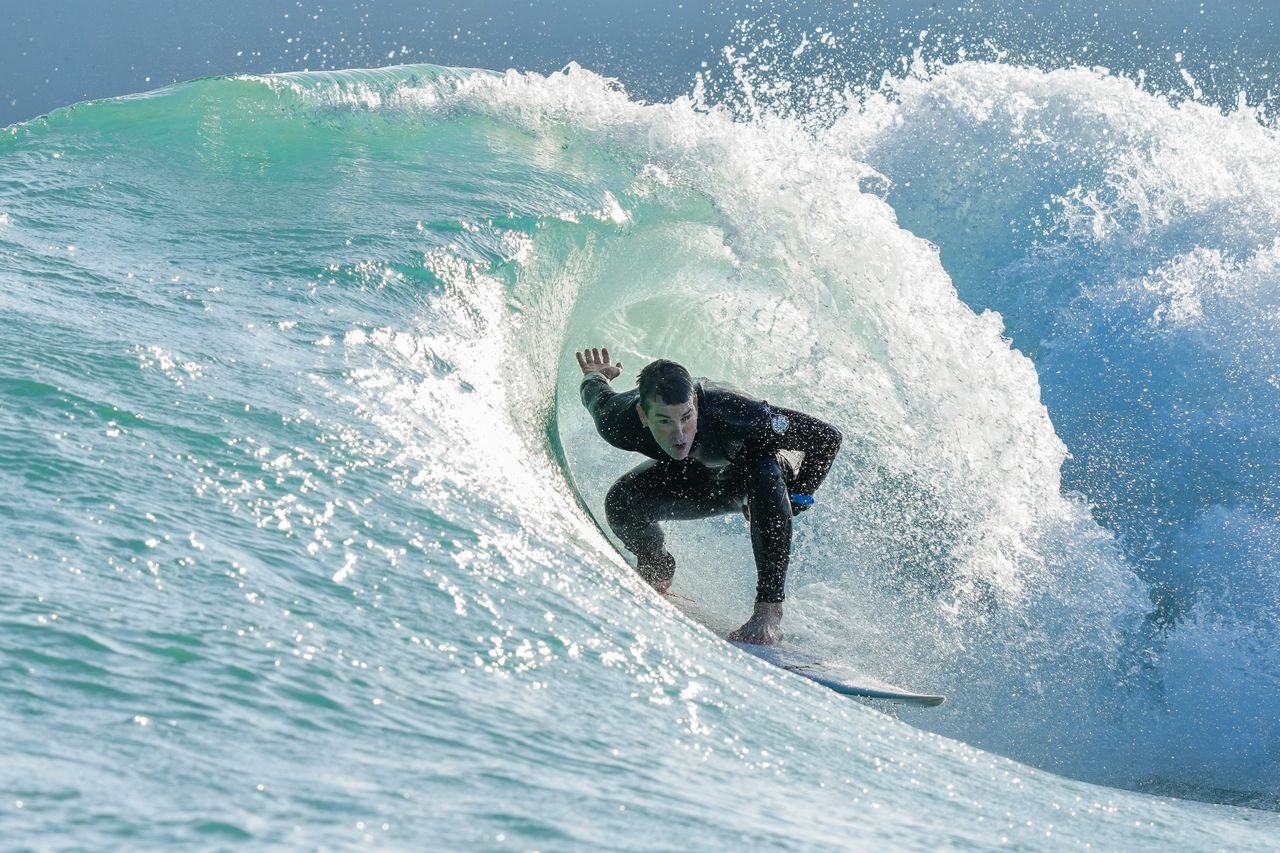
Mindfulness expert, scientist, and meditation teacher John Kabat-Zinn, Ph. D. once compared anxiety to a wave, saying:
“You can’t stop the waves, but you can learn to surf.”
When you feel an surge of anxiety in your body, the actual process only lasts about 90 seconds. The amygdala, mentioned above, triggers a flood of stress hormones like adrenaline. At about 45-90 seconds, chemicals like cortisol reach their peak.
If you can ride this out, you’ll begin to come down from that initial wave of anxiety.
What often happens, however, is people notice they feel anxious and get caught up in trying to fight it. They get anxious about feeling anxious and pulled into overthinking, trying to stop the thoughts, avoiding the thing that triggered the anxiety, and dealing with feelings of shame and guilt for feeling that way.
That’s the part that can last for minutes to hours.
So what does it look like to actually permit fear to pass over and through you? This is where working with a professional and a bit of experimentation and practice can help you find the tools and skills that work best for you. Some things you can try include:
Box Breathing
Also called 4-count breathing, this is a technique used by Navy SEALs to help calm their nervous system when stressed. Follow these steps to do it:
Inhale slowly through your nose for a count of four. Breathe as if you were trying to fill your belly instead of your lungs.
Hold the breath for a count of four.
Exhale slowly from your mouth for a count of four. Breathe as if you were trying to touch your belly button to your spine.
Hold with your lungs empty for a count of four.
If the counting makes it difficult for you, you can also simply inhale, hold, exhale, and hold while making the exhale a little longer than the inhale. That’s the part that helps activate your body’s calming responses.
Connect With Your Environment Mindfully
For many people, breathing techniques are hard because their breath is irregular. In my early days as a therapist, I’d try to start with a breathing technique only to have a client say, “I would breathe slowly if I could!” This generally just made the anxiety worse.
If you’re someone who struggles to start with breathing techniques, it may help to use a different calming method to bring anxiety down to where you can then add a breathing technique to help. Using your senses like sight, hearing, and touch can help your mind and body come back to the present environment.
One common tool is the 5-4-3-2-1 Grounding Technique. With this, you identify:
5 things you can see
4 things you can touch
3 things you can hear
2 things you can smell
1 thing you can taste (or imagine the taste if you don’t want to literally lick things in your environment)
While this tool can be useful, I’ve seen many people do it very quickly rather than slowly and mindfully.
A version I’ve found helpful is to slowly scan your environment for five things that are the same color. As you look around, take the time to really notice each object rather than making it a quick scavenger hunt. Notice how the colors may be similar but slightly different. Notice how the objects compare in size.
Use Your Sense of Touch
The list of grounding and mindfulness tools is long, so I’m only introducing a few here. But touch is also a powerful sense for connecting with the present to allow anxiety to pass over and through you. You can rub your palms on part of your clothing to notice the texture. If you have a drink, take time to notice how it’s cold or hot. You might splash cold water on your face for about 30 seconds.
Recite the Litany Against Fear
Finally, using a chant, mantra, prayer, or reciting a favorite quote can help shift your attention away from anxious thoughts to the new focus. The Litany Against Fear is a handy quote for doing just that.
Plus, you get geek cred for using it as a coping strategy.
“And When It Has Gone Past, I Will Turn the Inner Eye to See Its Path.”
Once you have grounded yourself and ridden out the wave of anxiety, it can be helpful to look at the moment to learn from it. This may be shortly after calming down or later when you feel more capable. You might also do it with some journaling.
Some questions to consider as you “turn the inner eye to see its path” might include:
What was helpful and what was less helpful? This way, you know which tools to use more of in the future and which ones aren’t particularly effective for you.
What was the story your mind told you? Minds are story-tellers and love drama! Did things turn out as bad or dramatic as your mind said it would be? Is the story it told you a familiar one?
How did things turn out? Did your anxiety make an accurate prediction of gloom and doom, or did you manage to figure things out? Even if things didn’t go as planned or perfectly, did you get through it okay?
What did you do that mattered to you? What was it like to do something that was important to you even though anxiety showed up?
What did you learn from this that can help in the future? Each experience with anxiety can help you be better prepared to manage it in the future.
By learning from your experiences, you can develop greater self-trust in your ability to do things that are important to you even when anxiety shows up rather than waiting for it to go away completely.
That growth helps you move toward the final line.

“Where the Fear Has Gone There Will Be Nothing. Only I Will Remain.”
Fear and anxiety never go away forever. There will always be new challenges and new things that cause you to feel worried. That’s just life.
By cultivating your ability to turn and face your fears in the service of things you value, you become bigger than your fear itself. When you know how to handle it, you spend less time worrying about feeling anxious and more time doing the things that matter. You become more engaged in life rather than avoiding it.
You learn that anxiety is a feeling you experience, not that you are “an anxious person.”
Fear comes and goes, but who you are at your core, the things you stand for, the people you value, your dreams and goals —
Those remain.
Looking for Support in Dealing With Anxiety?
Frank Herbert wrote the Litany Against Fear decades before modern approaches like Acceptance and Commitment Therapy (ACT) became popular. Yet the Litany captures many of the same principles psychologists and therapists now use to help people build resilience.
I provide therapy in Arkansas specializing in working with men who feel worn down trying to keep it all together while outthinking problems like anxiety. Together, we break the thought spirals that keep you stuck and use practical, experiential work like some of the things discussed above. I help you turn toward your fear and learn to let it pass over you so you can take meaningful steps toward feeling steady, engaged, and back in the driver’s seat of your own life.
Even if you happen to be driving an ornithopter.
Want to start a conversation? The button below will take you to the page with instructions on how to access my calendar and schedule a free, 20-minute discovery call.
Disclaimer: This article is for information purposes only and is not a substitute for therapy, medical advice, legal advice, or other professional advice. Always seek the advice of a qualified professional regarding questions about your own mental health, medical care, legal matters, or other personal circumstances. Every individual's circumstances are unique. Information that may be appropriate for one person may not be appropriate for another. Reading this blog does not constitute a professional-client relationship. While every effort is made to provide accurate and current information, no guarantee is made regarding the completeness, accuracy, or timeliness of the information provided. Any reliance on the information provided is solely at the reader's own risk. MoonPath Counseling, LLC and the author disclaim liability for any loss or damage arising from the use of this information.